
Ship of Fools (Nov 2026)
“It has been said that democracy is the worst form of government except all those other forms that have been tried from time to time”
—Winston Churchill
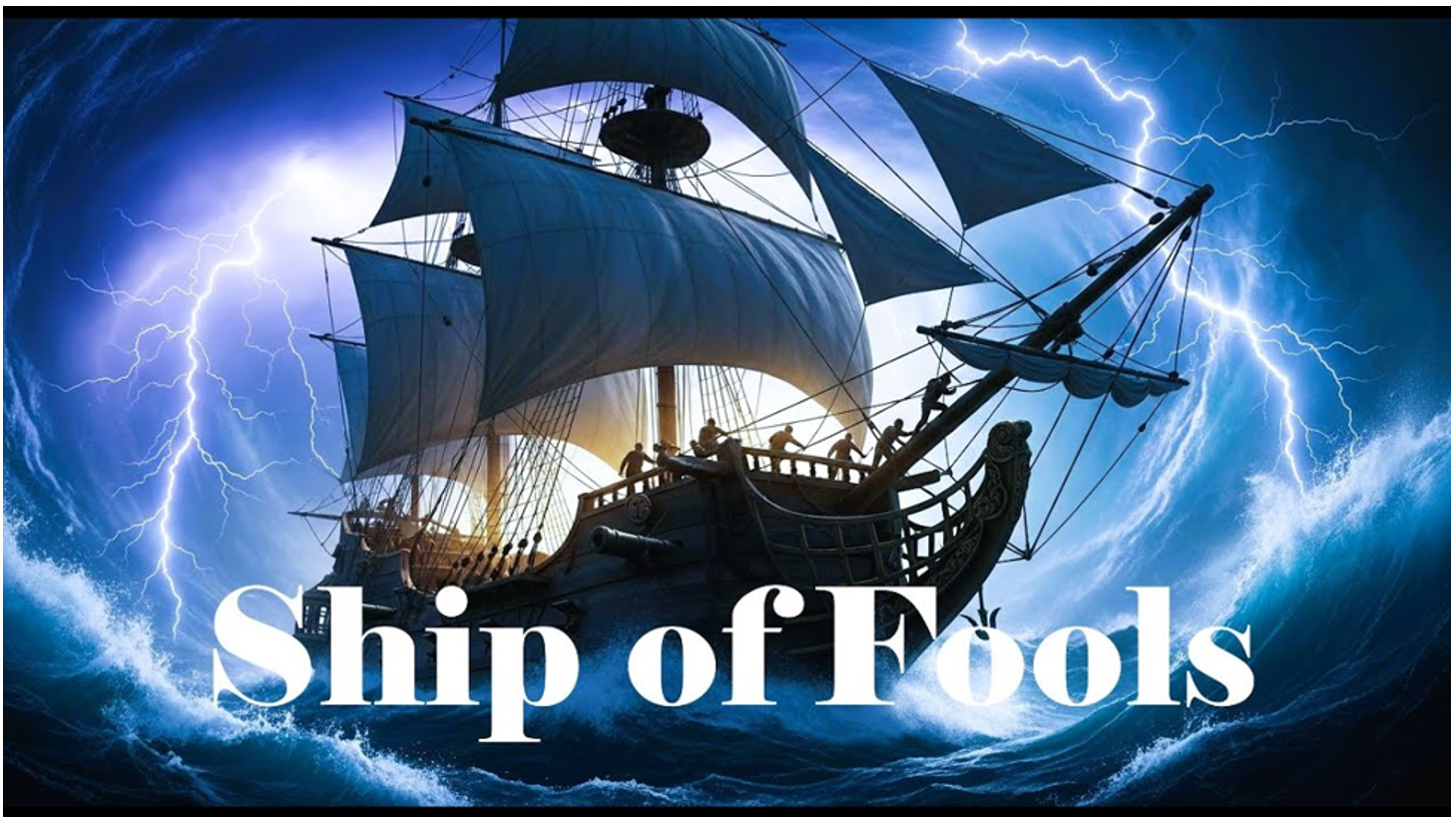
“Save me, save me from tomorrow
I don’t want to sail with this ship of fools”
—World Party
Per Wikipedia, Plato’s Ship of Fools is an allegory from Book VI of The Republic about a ship whose crew is dysfunctional and fights over the helm. It is meant to represent problems in governance when leaders are not chosen based on expert knowledge. It was written around 380 B.C. More than two millennia later, in 1986, “Ship of Fools” was the name of a great song from World Party, bemoaning materialism. From the consumption obsessed vantage point of four decades later, it is somewhat amusing that they were worried about ‘80s levels of materialism. Ship of Fools is also a famous 15th-century satirical novel, by Sebastian Brant, and the eponymous Hieronymus Bosch painting. Other musicians that have songs of the same name (that are not covers of World Party’s) include Erasure, Grateful Dead, Robert Plant, the Doors, John Cale, Elvis Costello, Bob Seger, and about a dozen more that I hadn’t heard of before. Ship of Fools is likewise a 1962 novel by Katherine Anne Porter, telling the tale of a group of disparate characters sailing from Mexico to Europe aboard a German passenger ship. Those older than me (a decreasing number as some of my colleagues here believe that I was a contemporary of Plato 😉) may remember that the book was turned into a star-studded movie in 1965. Clearly, the Ship of Fools has been a popular symbol for artists. Of the plethora of available material, this missive will focus primarily on Plato’s and World Party’s work, as we try to touch on contemporary governance, hopefully without figuratively stepping in it. More importantly, we suggest that now is a particularly important time for investors to focus on what is rather than what the past four decades have been. Let’s set sail.
“Were there a people of gods, their government would be democratic.
So perfect a government is not for men.”
— Jean-Jacques Rousseau
Churchill was undoubtedly correct in his assertion that democracy, with all its flaws, has been a superior system of government. It has brought more broad-based freedom and liberty than perhaps has ever been known throughout history and we are all blessed. As the United States just celebrated its 250-year anniversary this year, it is worth reflecting on the idea that life in the western world over the past quarter-millennium has been as good as it gets. And while many fear that things are derailing now, the following quote from Eric Peters’s (One River) weekly email is worth reprinting here.
“We all only have ourselves to blame. But of course, few of us ever do. We blame others. Which is why America’s founding fathers, steeped in ancient western philosophy, human psychology, and the history of the rise and fall of mankind’s many empires devised a sublime political system of checks and balances. And then married it to free market capitalism, which for all its flaws, is the most robust system ever devised to allocate capital to its highest uses. No other system has produced the invention, wealth, and power of democratic, free market capitalism. And while it is naturally true that from the very first day of its construction, many have attempted to undermine our system, it has proved sufficiently durable to carry us through our many conflicts, not least of which was our civil war. The system self-corrected in response to the Biden administration’s many failures. And it has self-corrected in response to the Trump administration’s many faults. For all the hysteria about our descent into autocracy, the system held strong. And whether you love or hate the outcome, all that matters for the long-term success of the American experiment is that the power to check and balance remains robust.”
“We’re setting sail to the place on the map
From which no one has ever returned
Drawn by the promise of the joker and the fool”
— World Party
We should all feel gratitude. Yet, as Charlie Munger advised us with his Latticework of Mental Models, we shouldn’t forget to study history, philosophy, psychology, and other fields of human knowledge. Doing so, one quickly discovers that democracy has no shortage of critics, including most of the Founding Fathers of the United States. As Mr. Peters relayed above, fearing democracy, they worked tirelessly to create a democratic republic. Famously, Plato was no fan of democracy. It is believed that his views may have been slanted from having watched democratic Athens lose their long, grueling war with Sparta, get treated badly by the Spartans, and once the Spartans were kicked out, having to witness a corrupt, misguided democracy put his mentor Socrates to death for the mortal sin of expressing unpopular opinions. But all things considered, unsurprisingly he makes some good points. Borrowing from an article in Philosophy Now, we find that “In Book 8 of the Republic, Plato describes how a democracy is unlikely to be a stable political solution, since it offers freedom but neglects the demands of proper statecraft. Plato therefore predicts an almost certain collapse of democracy and decline into tyranny, a total loss of freedom. Why does democracy involve a neglect of statecraft? Plato argues that in a system where political power (‘cratos’) lies in the hands of the people (‘demos’) it is not guaranteed, in fact is unlikely, that those best equipped to rule will get a chance to manage public affairs. Instead the loudest voices will dominate, irrational, ill-motivated decisions will be made and the complex arena of politics which is in need of careful ordering and management will turn into a crazy circus.” Does any of this sound contemporary? The article adds, “to make this plausible, Plato illustrates his account with his famous ‘ship of fools’ analogy: Imagine a sea voyage on which all that are travelling feel entitled to claim the helm. Though the captain is a good navigator he isn’t good at convincing the others that he is, and those who shout the loudest and make the most confident claims, though they know nothing of the skills of navigation, will get a go. Discipline and order go overboard and what results is a kind of drunken pleasure cruise rather than a rational, well-organized journey from A to B.” And it isn’t just Plato. Scottish historian Alexander Fraser Tytler famously stated that, “A democracy cannot exist as a permanent form of government. It can only exist until the majority discovers it can vote itself largess out of the public treasury. After that, the majority always votes for the candidate promising the most benefits with the result the democracy collapses because of the loose fiscal policy ensuing, always to be followed by a dictatorship, then a monarchy.” If you research the Founding Fathers, there is an abundance of literature on their concern about “tyranny of the majority.” The republican form of government and the division of governing bodies assuaged much of these problems. Fernando del Pino, in his must-read short essay “The Five Experiments that have Never Been Tried,” suggests that all forms of government generally have a powerful aristocracy in the background, pulling the strings.
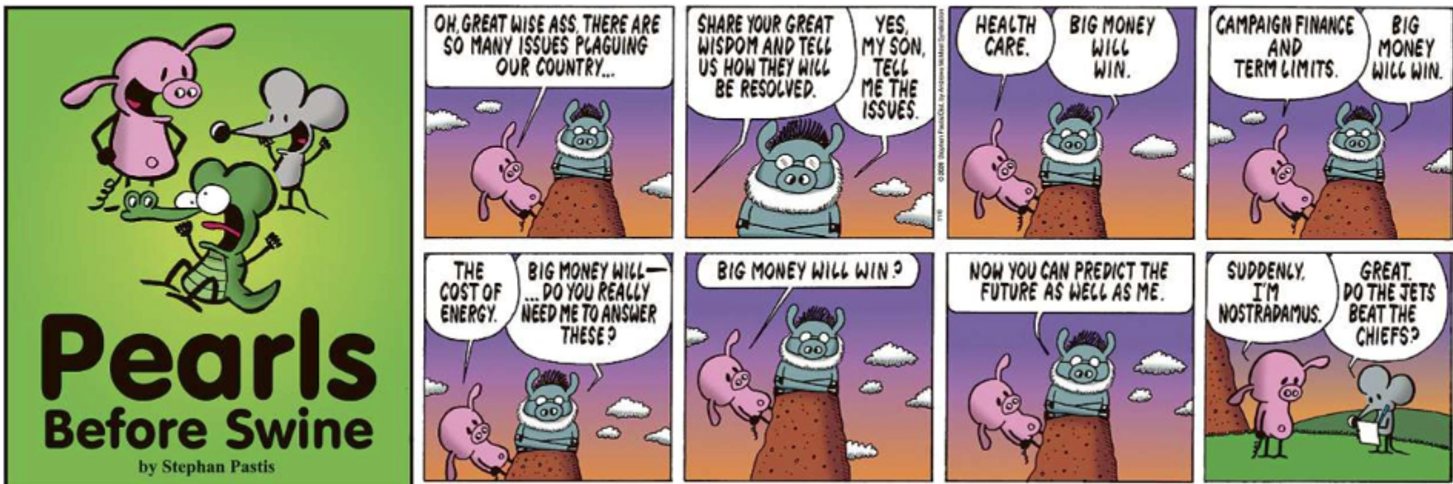
This isn’t meant to be a thesis on government, which could go on for hundreds of pages. We are hopefully merely making the point that democracy is wonderful and democracy is deeply flawed, and that those flaws have financial consequences. Plato and Tytler seem to have a point that it lacks permanency, struggling once “the majority discovers it can vote itself largess out of the public treasury. After that, the majority always votes for the candidate promising the most benefits.” Hopefully both Republicans and Democrats can admit that one thing the two parties both always agree on is the need to “promise the most benefits,” to offer “largess out of the public treasury.” And this isn’t a U.S.-only phenomenon; name the last time you heard any candidate from any major political party, in any country, run for office campaigning on the idea of limiting the largess, reducing the windfalls, tightening the budget! It is not even a remote possibility in this contemporary world.
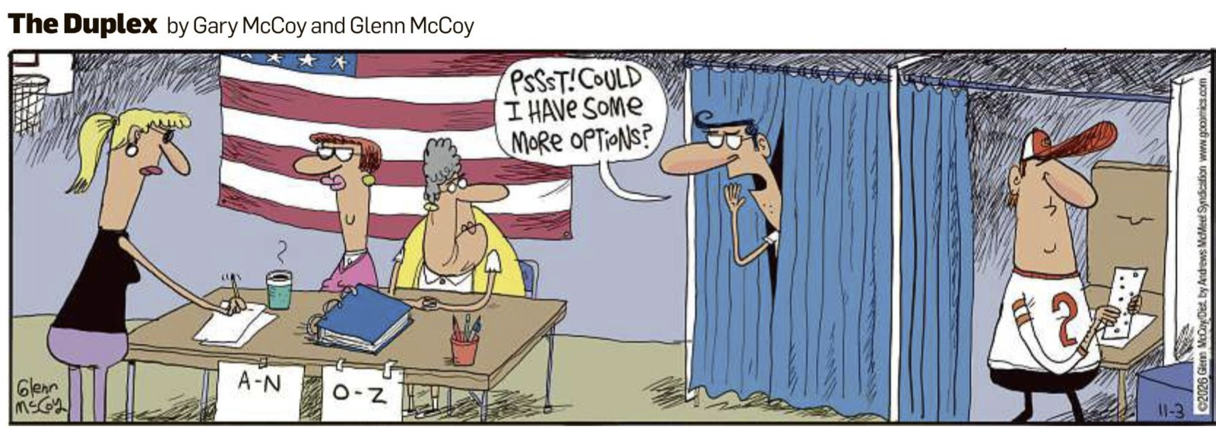
Okay, enough politics. Whether or not democracy is currently waning we will leave to posterity. We can all be happy that this month’s election in the United States was peaceful, whether or not we liked the outcomes. But hopefully no one has turned a blind eye to the fact that almost all countries are now dishing out a massive amount of “largess out of the public treasury.” Let’s turn to the economic consequences of infinite largess, and ultimately to the investment ramifications.
“Drawn by the promise of the joker and the fool”
–World Party
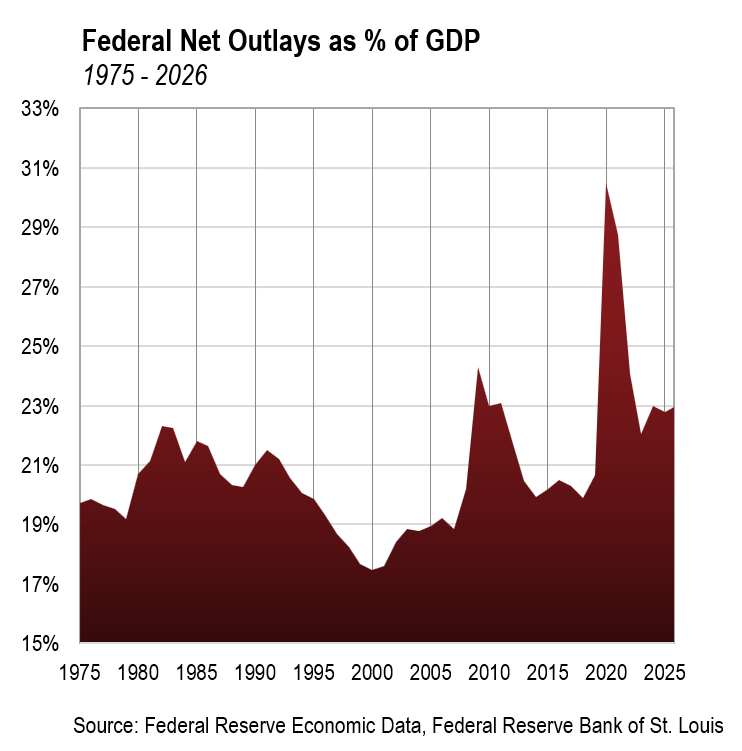
Government’s share of the economy remains consistently high:

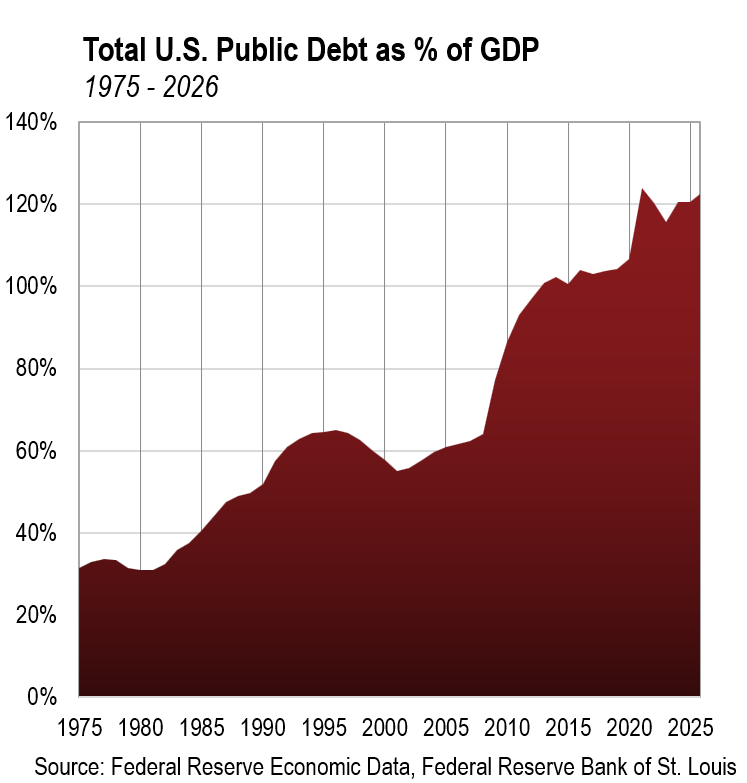
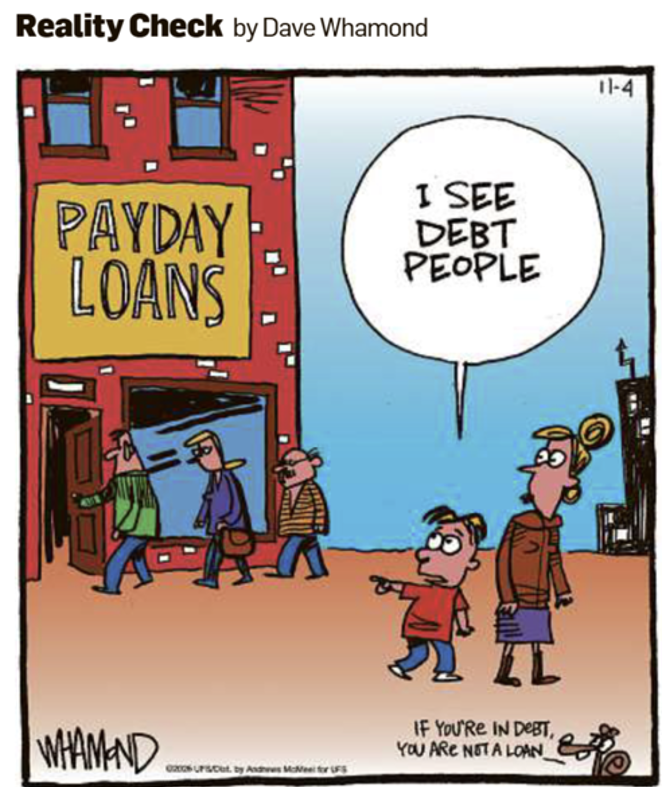
Leading to ever increasing levels of debt relative to the size of the economy:
Causing increasing interest payments:
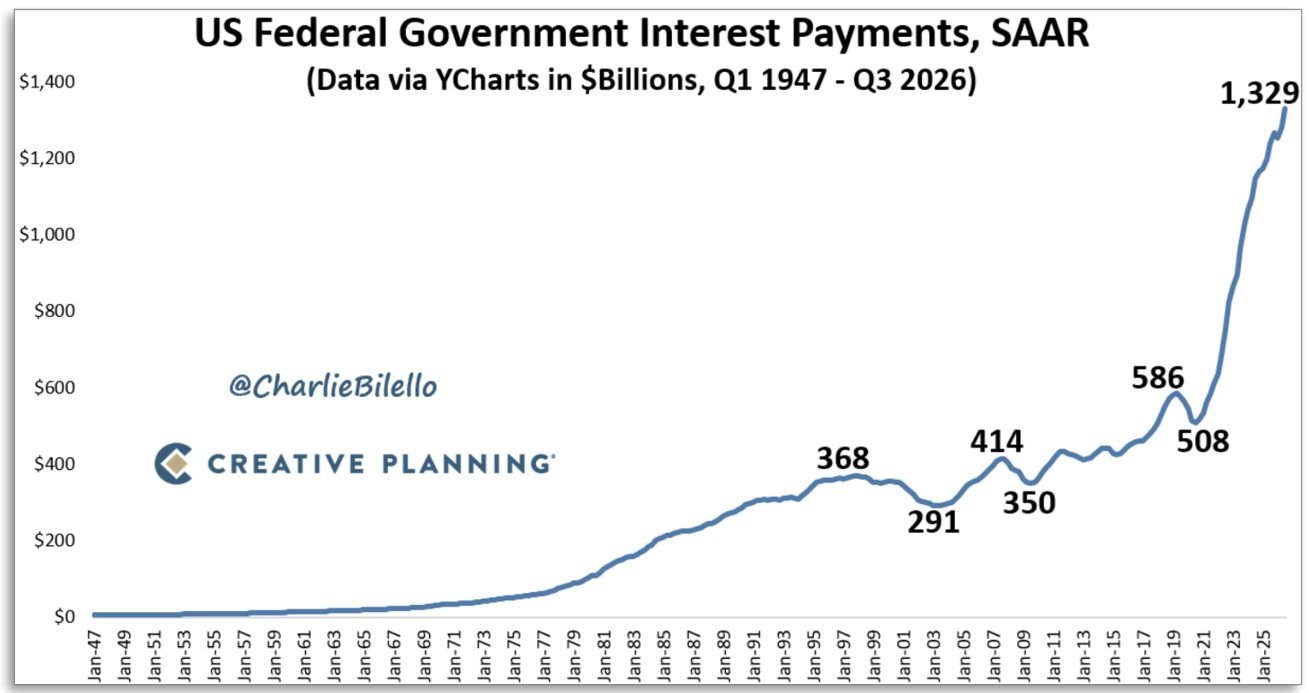
Which in turn increases government outlays, which increases debt, which increases interest payments…
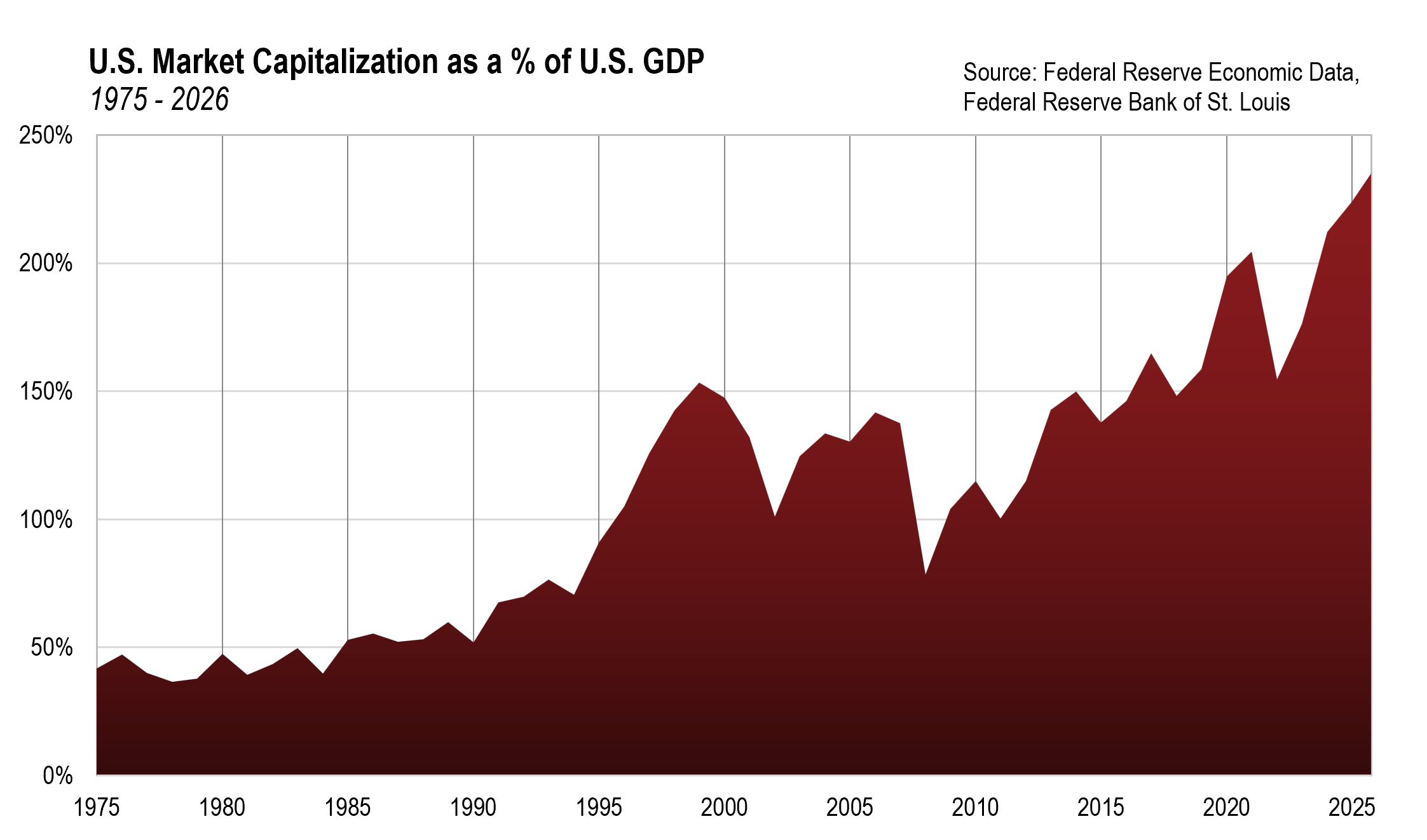
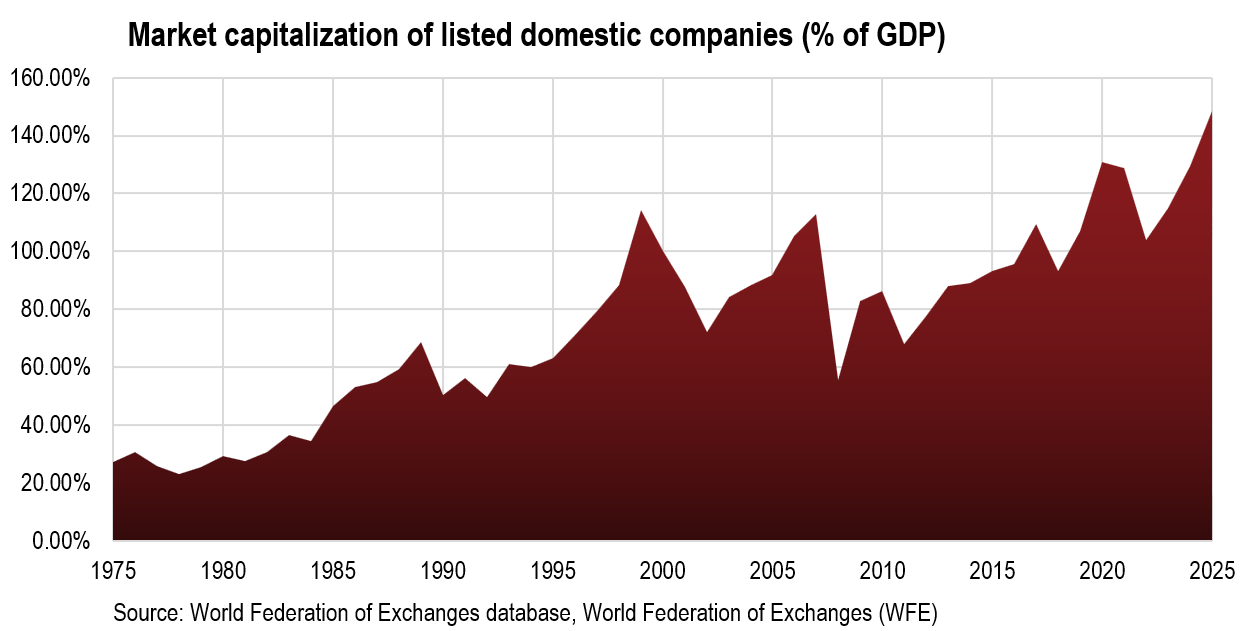
Yet equities’ expected claims have grown to record levels:
Adding the three together, it is unimaginable that some, if not all, of these claimholders won’t be disappointed:
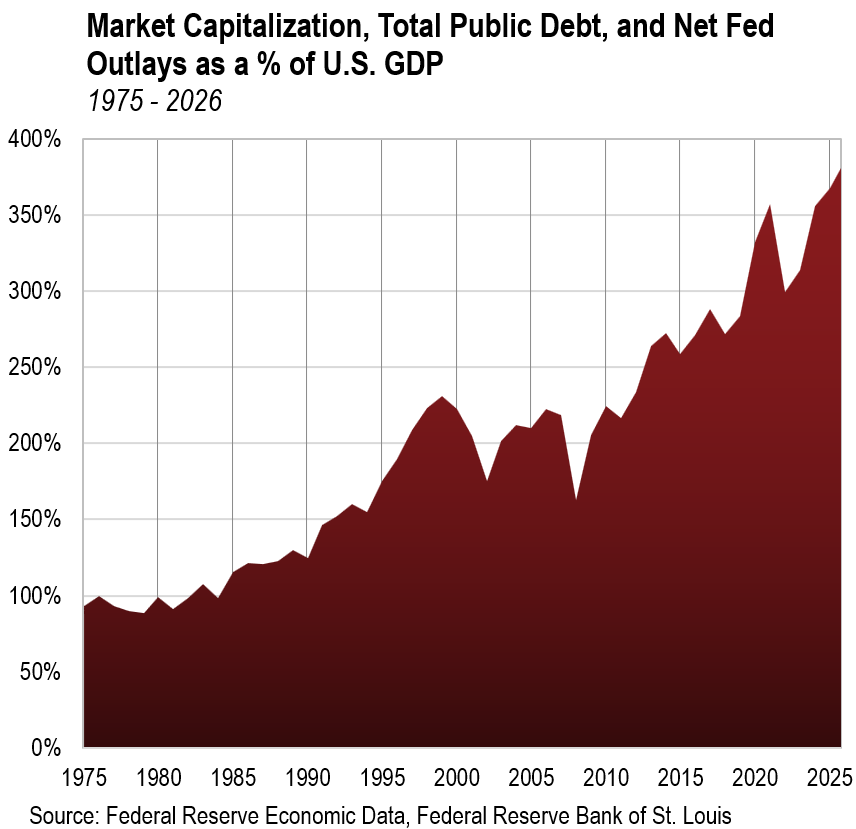
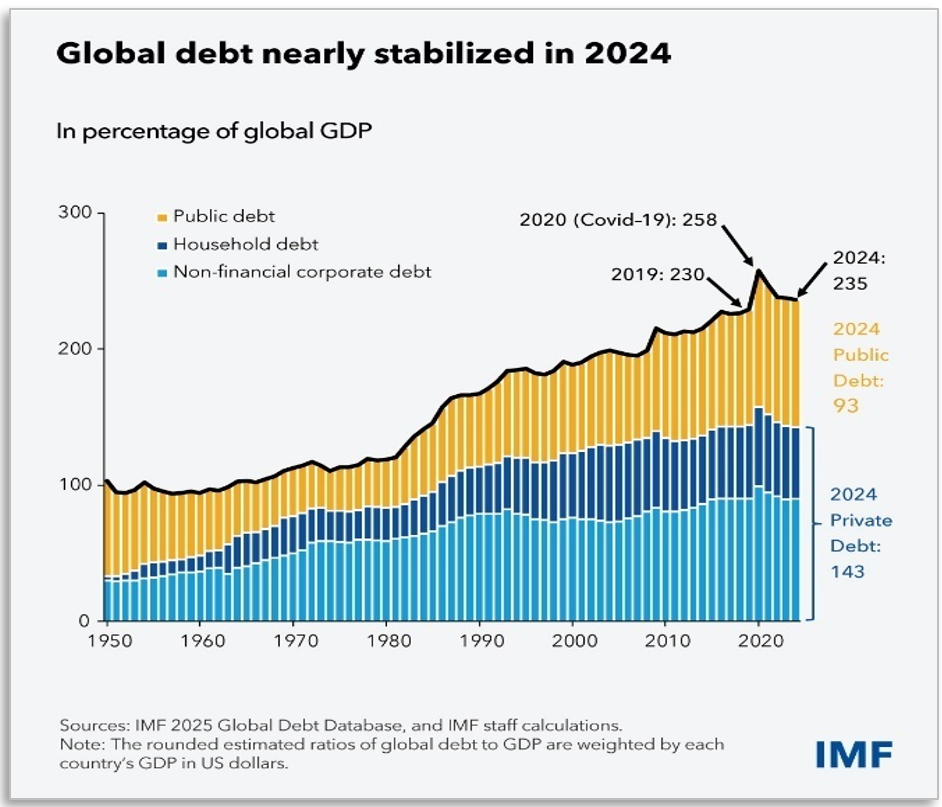
And that’s just the United States. The consequences of fiscal profligacy will be a global phenomenon:
“As your little boat struggles through the warning waves,
but you don’t pay
You will pay tomorrow
You’re gonna pay tomorrow, yeah
You’re gonna pay tomorrow”
– World Party
Reviewing some obvious basics, if we borrow now, we gain the benefits of those funds (and anything purchased with those funds) now. We don’t have to wait. But it is better to use a mortgage to buy a house than to save to buy it after the kids have moved out. However, whether or not the borrowing was used wisely, it must be paid off. Current pleasure comes at the cost of future pleasure. You will pay tomorrow. The concept is no less true for companies and countries as it is for individuals and families.
If we borrow to cover excess spending, then spending must be cut in the future, or the debt must be defaulted upon, or new money must be fabricated with which to pay the debt. The untenability of spending cuts in a democracy was just addressed. Default seldom happens when the borrowing was done in a currency where the borrower has the ability to conjure more out of thin air. Therefore, the logical expectation is that this time will be like almost all similar times in history: The money will be printed. Printing money is inflation. Inflation isn’t about AI productivity. It isn’t about population growth. It isn’t about oversupply or undersupply of a specific good. It is all about growth of the money stock. All the exogenous factors, such as those just mentioned, will affect the price of certain goods or services, and may affect the central banks’ eagerness to print money, but they don’t cause or alleviate inflation. These can only affect where, not if, the symptoms of inflation rear their ugly heads.

It is worth devoting a few sentences to inflation, because it is doubtful that many people in the developed world fully appreciate how deleterious inflation is. It has been too many decades since it was last experienced. Jim Grant has observed that at the Federal Reserve’s goal of 2% annual inflation, prices would go up 5 times during an average lifetime. Of course, he is correct; my math calculates that 83 years of 2% is 5.2 times, or in other words – an 80 percent loss of one’s purchasing power. And of course, 2% seems to have become less of a target than a floor for the Fed, which is important because 3% inflation leads not to a quintupling of costs but to an increase of 11.5 times. Lately, they seem to have some comfort with inflation circa 4%, which would lead to a 26-fold increase during an 83-year lifespan. 5% yields 57 times and 10% (1970s era inflation) would cause prices to rise 2700 times!
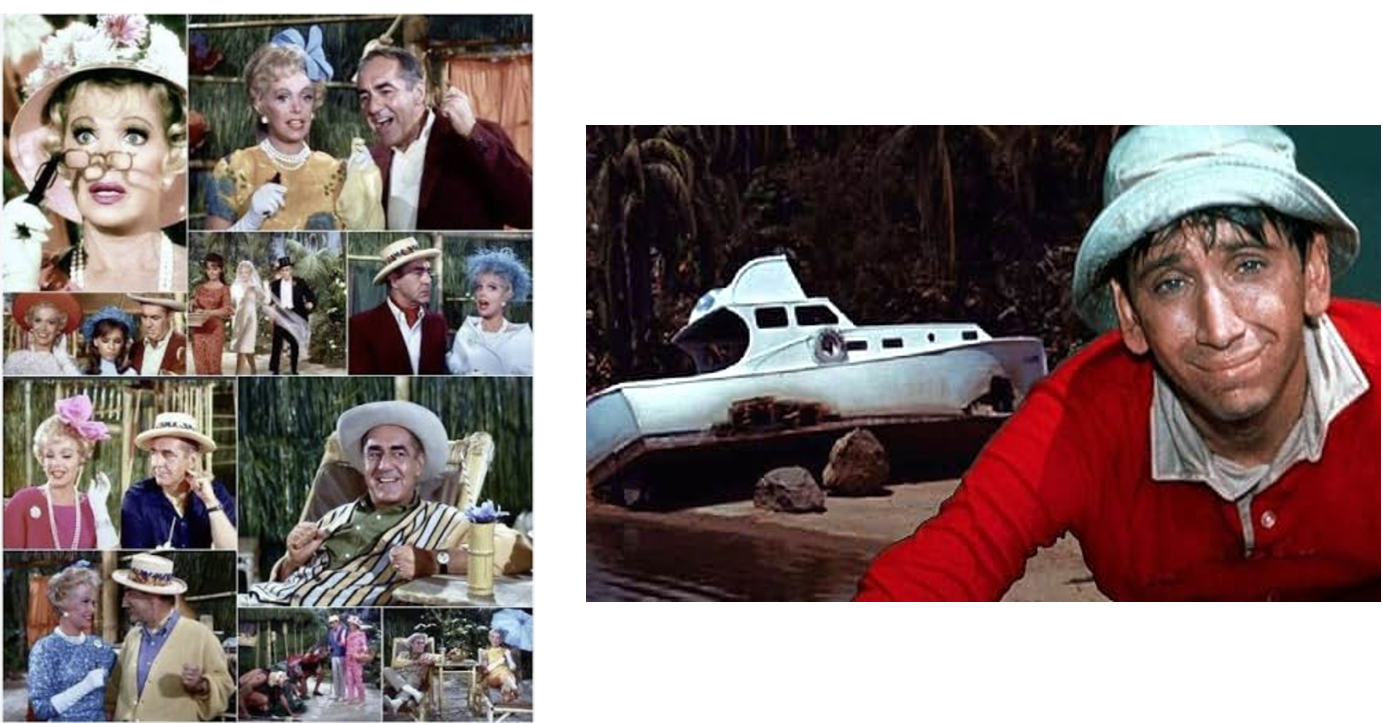
Drifting off on a quick tangent, another ship of fools was the SS Minnow of Gilligan’s Island fame. It’s amusing to ponder the perception of what it meant to be a millionaire, circa 1965. Thurston and Lovey Howell, the millionaires, were ultra-elite. They owned Howell Industries, and per Wiki, they were “so rich that they took thousands of dollars with them on the supposed three-hour tour. On the mainland they had a butler, an upstairs maid, a downstairs maid, a cook, a gardener, a chauffeur, and other servants, even a butler for their butler.” In other words, the millionaire of sixty years ago was equivalent to the billionaire now. What will prices look sixty years hence? Inflation matters immensely!
If $2 trillion dollars is now the effective floor for deficit spending by the U.S. government, what does that mean relative to the $5.5 trillion of money stock that the Fed has created over the past 115 years?
Printing the money to finance the annual deficit would require, in one year, a 35% addition to the money stock that took 115 years to build (35% inflation??). None of us know the future, but only a fool will not prepare for inflation.
Investment Strategy: Stay Clear of the Ship of Fools
Charlie Munger famously said, “It is remarkable how much long‑term advantage people like us have gotten by trying to be consistently not stupid, instead of trying to be very intelligent”
“I don’t want to sail with this ship of fools, no, no
I want to run and hide right now”
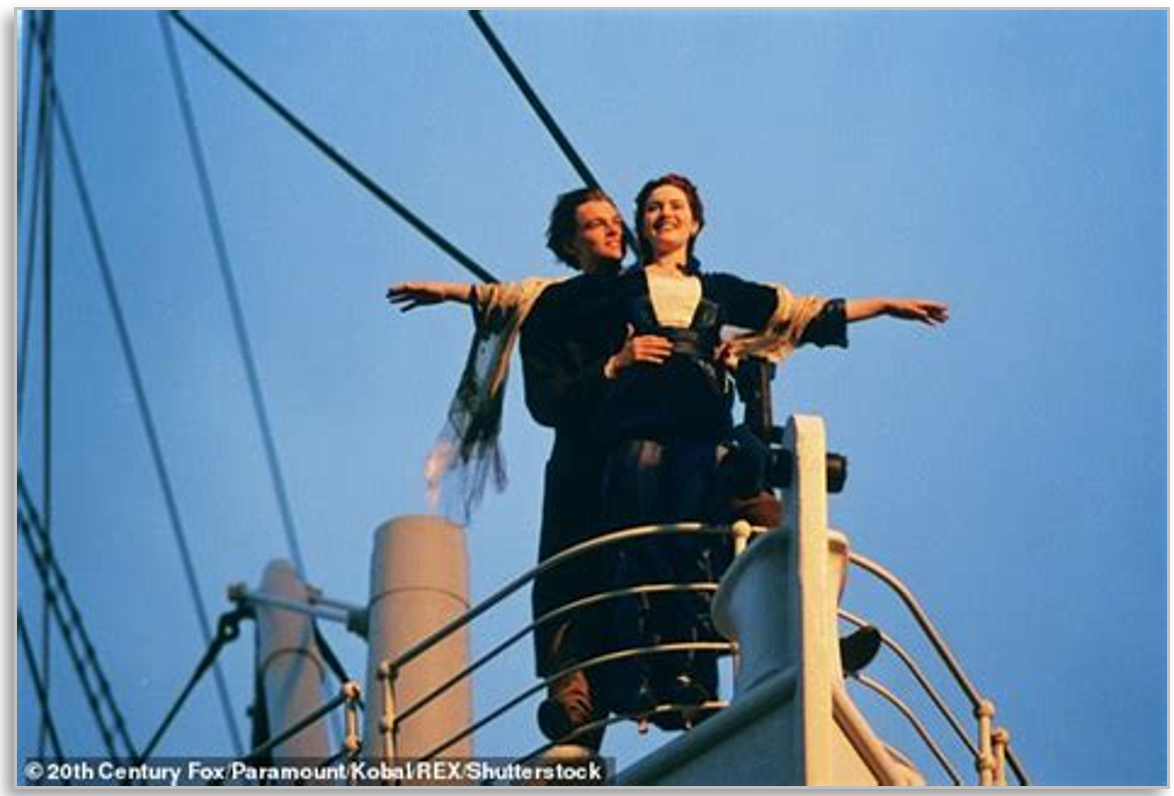
Whether the world’s economic ship is speeding toward an iceberg isn’t for certain, but it seems obvious that the risk/reward of traveling on the ship is decidedly negative. Let’s start by discussing which assets seem prudent to avoid, those prone to falling during inflationary environments. The importance of this should be self-evident. Then we’ll circle back to discuss money making opportunities.
“You never force the sea. You go around it, adjust your course, and keep moving.”
– Olivier de Kersauson
“The safest thing to do when everyone else is running for the bunkers is to check the price of the bunkers. Often, the ‘safe’ assets carry the most valuation risk of all.”
– Howard Marks
“What the wise do in the beginning, fools do in the end”
– Warren Buffett
Mr. Buffett has so many great quotes, this is one of the best. It is more apropos than ever as we approach the two decade anniversary of when “growth” stocks took the baton from “value” stocks. Certainly, “growth” stocks were the wise thing to buy at the time. But society, trend follower that it tends to be, finds things to be more attractive after they have gone up substantially. I don’t remember who it was that astutely observed, effectively, that no investment is so good that it can’t be ruined by too much money chasing it.
What, currently, could be more popular and over-owned than Passive Strategies? It is hard to find many institutions or individuals that don’t have a major commitment to passive strategies. We were worried about the mal effects of these price-agnostic products years ago. If interested, please check out our commentary entitled The Passenger on our website. This can be viewed as proof that we were wrong or a caution flag that things are perilously overdone now. Posterity will provide the answer. In a nutshell, our view is that when everyone is wisely and industriously analyzing securities, and thereby making the market somewhat efficient, it is advantageous to take a free ride via the index ownership. When very few people even bother with the tedious act of price discovery, then two things happen: A decisive advantage accrues to those who do the analysis, and the index becomes inefficient and dangerous. We point out ad nauseum that owning the popular stocks/indexes was hazardous to one’s wealth at the top of past bull markets: 1929, 1972, 1999, 2007. Will this time be any different? Are we witnessing what fools do in the end?
This time could (should?) be worse. Why? Firstly – the math. Valuations are well beyond any heights ever seen historically. We didn’t argue with people who stated, several years ago, that this is unlike 1999 because the MAG7 companies weren’t money losing. They tend to be profitable, hard to replicate, businesses. We agreed, believing that a better analogy was the Nifty-Fifty stocks of the early ‘70s. (See our commentary The Nifty Seven for more.) Although this remains true, it is hard not to notice the plethora of money losing companies that are now all the rage. Speaking of which, our second passive-related point is that investor protections might not be what they used to be. It is likely that things like SpaceX , Open AI, and Anthropic will follow in the footsteps of Tesla, which was added to the S&P 500 Index in late 2020, post a 20-fold run up over a couple of years. This resulted in a market cap of two-thirds of a trillion dollars and has subsequently massively underperformed the market. The Venture Capital (VC) guys make enormous profits and then appear to dump the stock onto the indexers at inflated prices. On the other side of the coin, passive strategies often bail out of stocks at the bottom. The Indonesian index, for example, recently fell by a third. The more attractive valuations arguably should have led to increased investor interest. Instead, it is said that MSCI will likely drop the country from its Emerging Market (EM) classification. This resulted in a further 17% drop, leading to half-off sales not based upon fundamentals. Passive is a momentum strategy buying high and selling low. It works spectacularly well while it’s working and disastrously when it ends. We’ll conclude this part of the discussion, but we encourage readers to look back at the inopportune times when various stocks have been added/deleted from popular indexes, to read our aforementioned commentary, and/or examine the excellent thoughts of Mike Green and others.
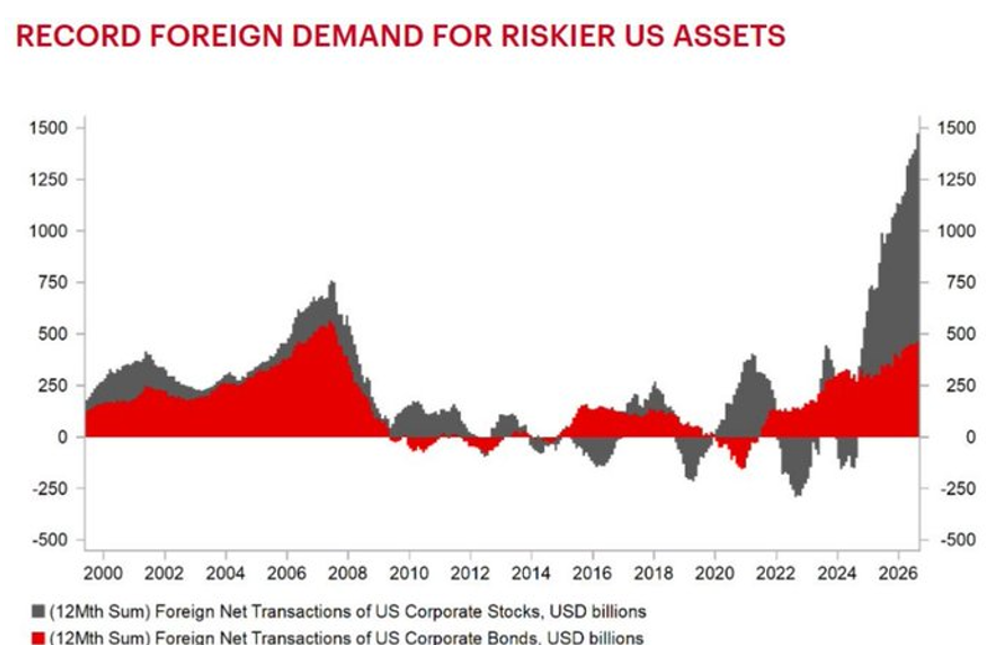
Long duration assets are also obviously prone to disappointment during inflationary times. Long bonds should only be purchased with eyes wide open and at appropriate yields. Less obvious to many is that high multiple stocks are longer duration and thus also command caution. As mentioned, U.S. stocks are at record high multiples, by most conceivable metrics. The U.S. indices are stacked with long–duration stocks. A quick perusal of Price/Earnings multiples during the 1970sin the U.S., or of countries with higher interest rates now, will show that theory and practice agree that higher interest rates augur lower valuation multiples.
- “You could own the S&P and think you’re diversified, but you’re not diversified because it’s really just one trade right now.” Steve Eisman (the guy from The Big Short)
- “Defensiveness is necessary to survive, but hiding in slow-growthstaplesat peak multiples isn’t defense – it’s just locking in underperformance.” – Stanley Druckenmiller
Another asset class that has longer duration, is prone to being hurt by rising interest rates, and is seemingly over-invested, is private equity. It has many comparative advantages that made it an interesting asset class when few were investing there. VC may fit in that category, too. Certainly, it has been a good place to be in the past. Overlooked? Not a chance. Overdone? Time will tell.
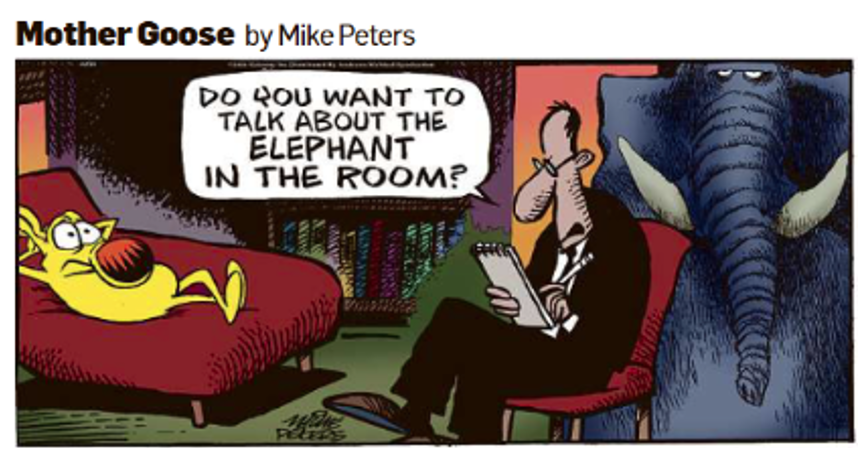

As the fools rush into areas where the wise, having preceded them by a decade-and-a-half, now head to the exits, it is worth charting a course toward where the wise should arguably be investing now.
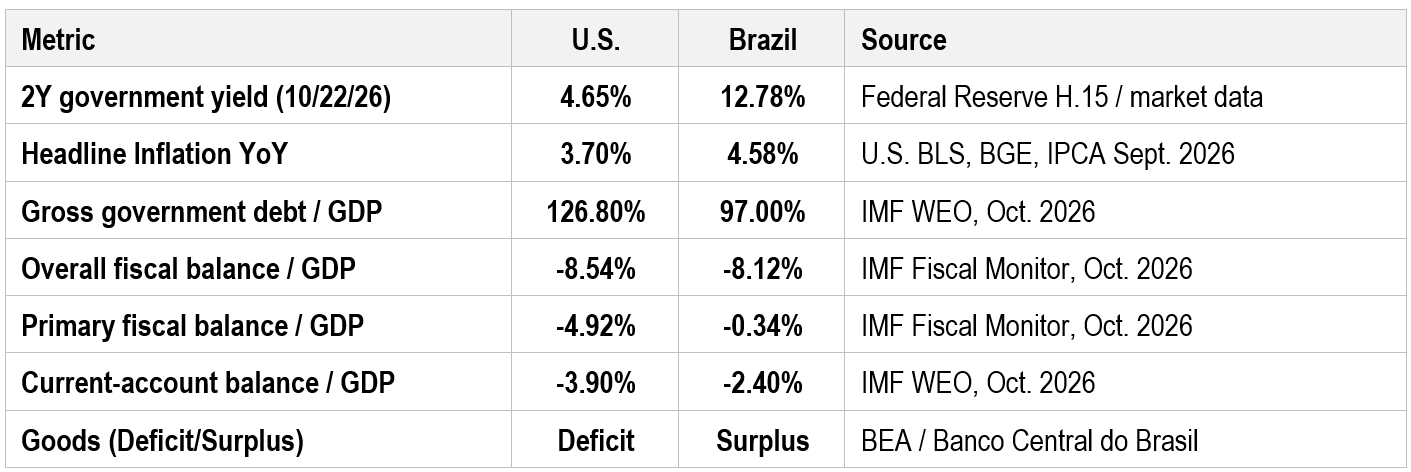
Ending on a decidedly upbeat note, there is no shortage of calmer seas. For starters, if inflation is a problem, one should demand high rates of interest. For example, in the early 1980s in the U.S., inflation was running at low-double-digit levels, but rates got to 14% on the long bond and 22% on money market funds. Investors did quite well because they were amply compensated for inflation. Whether or not 2026’s rates, in the 4-5% range, will prove adequate will come more into focus over time. However, Brazilian sovereign bonds offer roughly three times the yield – circa 14%. You may be wondering, isn’t Brazil way riskier? Maybe. Probably not, though. Inflation (as stated) of both countries is 4%, plus or minus a percent. Their fiscal situation, while far from ideal, is decidedly stronger than that of the U.S.
Regarding stocks, while the S&P 500 is priced for perfection, many other markets have been cast overboard into the depths, languishing at rock bottom valuations. There are many, but a handful are featured below.
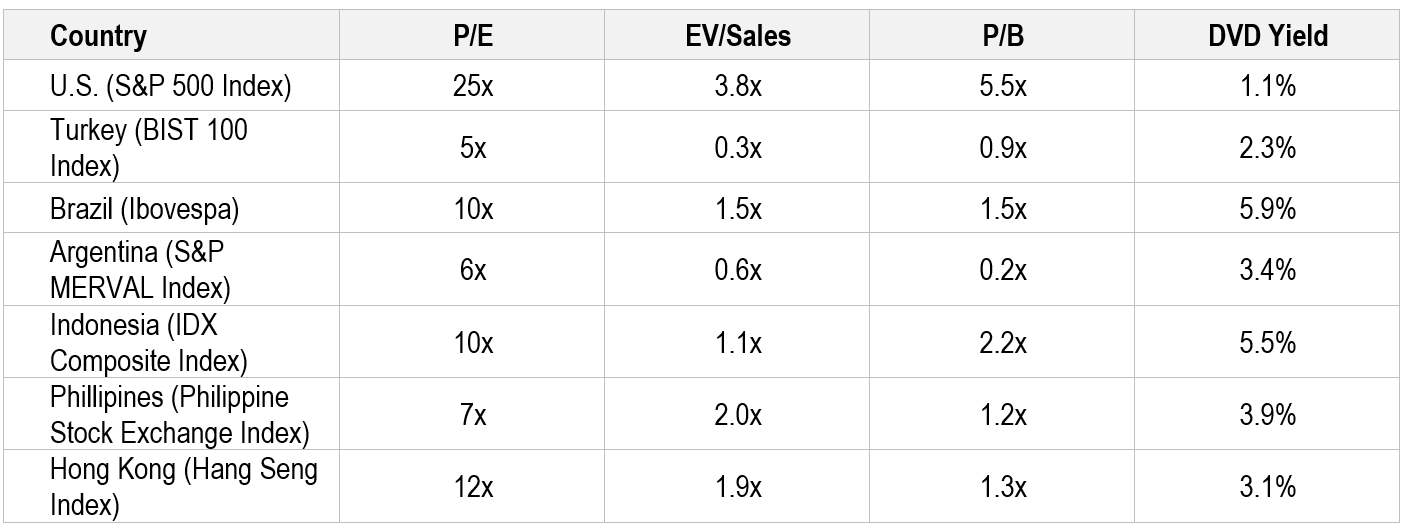
The U.S. market is generally at 2 to 5 times the price, on all metrics. Is it worth a premium? Absolutely. Reasonable people can debate on whether the premium should be 20%, 40%, 60%, 80%, 100%. But 200% to 500% seems like more than a stretch. Keep in mind that China (making up much of the Hong Kong Hang Seng Index) is the second largest economy on earth. It is the largest economy based upon electricity consumption, manufacturing, and other metrics. It is giving the U.S. a run for its money in AI and other technology. It is world class in many areas. Not many companies are successfully competing with BYD Company Limited (BYD), Contemporary Amperex Technology Co., Limited (CATL), or Tencent Holdings.
Indonesia produces the majority of the globe’s nickel. Today, almost all batteries are highly dependent on nickel. The country is rich in energy and other natural resources. As such, it has played a pivotal role in Japanese and European history. Investopedia ranks it as the 17th largest economy in the world. The Philippines is a diverse economy with some good companies. The country has been strong in BPO (business process outsourcing). They’ve developed a reputation in accounting and healthcare. There are a lot of conglomerates there. (See our whitepaper on the mispricing of conglomerates in the marketplace.)
Brazil is of course the “B” in “BRIC”, the countries that were considered must own late in the aughts decade. Investopedia ranks it as the tenth largest global economy. They have a broad-based economy and a large land area, with many natural resources. It is one of the few countries on earth with meaningfully positive real interest rates (mentioned above). Stocks tend to move upward when real rates drop. Argentina has been a mess for decades. While it is impossible to have confidence that they’ll get it right this time, change is afoot. The Argentinian public is sick of Kirchnerism. If they prevail, they will benefit from their abundant energy, great farmland and some good companies. Prices are attractive enough that returns could be meaningful without significant progress but superior with any success.
Turkey has long been a major economy, ranked number 16 by Investopedia, and is a member of NATO. It is the 7th largest country in Europe. Per Wikipedia it is the 4th most visited destination in the world. We will repeat our message that it is a tremendous error to view emerging markets as a risky niche. It is not a niche at all. It is a diverse assortment of many countries, climates, peoples, religions, skill sets, competitive advantages, cultures, and other attributes. At current valuations, logic predicts that, rather than risky, their markets could prove to be quite lucrative, as they often have been in this continuously cyclical world.
As a reminder, during the inflationary 1970s, a very tough period for financial assets, John Templeton produced strong returns by investing in Japan back when it was an emerging market, a disrespected market at the time. Will history rhyme yet again?
And finally, any discussion of our increasingly inflationary world cannot be complete without a mention of real assets. As the supply of money grows relentlessly skyward, it loses value relative to things that are necessary and scarce. The size of the earth has not grown. The quantity of resources in the earth’s crust has not increased. The amount of arable land has not changed. And the number of people demanding these resources has steadily marched upward. More money and more people are chasing increasingly scarce goods. Fortunately for prospective investors, the valuations of many stocks associated with these desired resources have stayed at bargain prices.

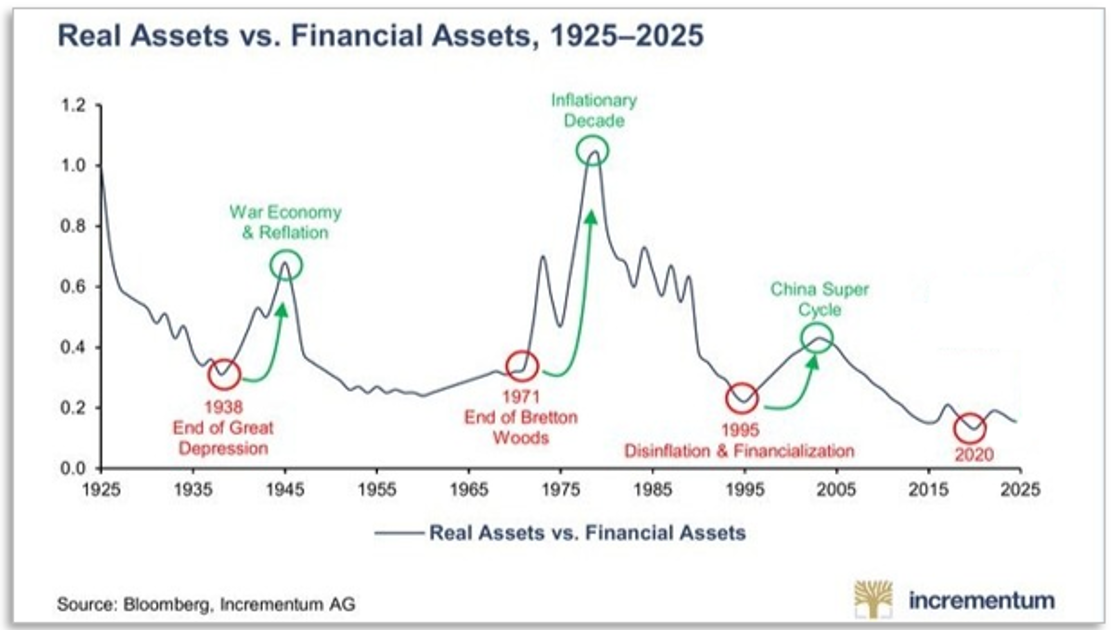
The chart may be a tad misleading but don’t overlook the magnitude. That’s a ninety percent drawdown over my career thus far. As Howard Marks likes to point out, you can’t time the market, but you can have a pretty good idea where you are in the cycle. Real assets are likely at a cyclical bottom but, with confidence, we can only say that we’re a long way from the cyclical top. We again suggest that investors explore how real assets have performed during the inflationary 1970s and during inflationary periods in various countries over time. We’ve written more than enough on this subject, so we’ll stop here. We are pleased to be holding some of the world’s best companies in fields like electric utilities, telecommunications, railroads, base metals, precious metals, natural gas, oil, uranium, agriculture, and forestry. Fortuitously for opportunistic investors, many of these attractive areas are on sale. From their first quarter highs, gold is down 30%; silver is down an astounding 61%. Platinum and palladium are down 50% and 54%, respectively. Gold miners (GDX) and junior miners (GDXJ) are down 31% and 38%, respectively. Natural gas futures are off 37% and the timber ETF (WOOD) is down more than 20%. A Black Friday sale for independent, active investors!
Conclusion
“Save me, save me from tomorrow”
– World Party
“The wind came building from the cold northwest
And soon the waves began to crest
Crashing cross the forward deck
All hands lost
I alone survived the sinking
I alone possessed the tools
On that ship of fools”
– Bob Seger
It’s already been three decades since Neil Howe and William Strauss focused people on the cyclical nature of the world in their book, The Fourth Turning. They suggest that every fourth generation, having long forgotten the experiences learned 80+ years earlier, society tends to repeat things that cause the cycles. In the case of the Fourth Turning, people pay the price for having forgotten caution and moderation. It is now approximately four generations since the Great Depression and WWII. Long gone are society’s fear of debt, war, expensive valuations, and fallibility of governments. We’ve reached the point where the vast majority of voters (regardless of political party) vote for those who promise to spend for them. Across the globe, spending has been rising, and government debt has soared in lockstep.
History and logic have taught us that these are usually inflationary phenomena. It is likely that asset classes that performed best during the halcyon days of spending and debt accumulation will not do well when the proverbial piper comes a-calling. Trying to choose which of these past winners will do well in the coming environment may be a fool’s errand, tantamount to rearranging the deck chairs on the Titanic. Investors likely will find smoother sailing elsewhere. If the index is overvalued, look at stocks that are underrepresented in the popular indexes. If long-duration assets are adversely exposed, focus on shorter duration assets.Luckily, there are places in the world that still have attractive levels of real interest rates. As Bob Seger’s lyrics remind us, we can heed the warnings. We possess the tools. Fortuitously, and inexplicably, the scarce inputs required by the economy in general, and AI/technology specifically, have not been bid up in price. As a result, investors have tremendous opportunities to invest in electricity, natural gas, uranium, industrial metals, precious metals, agriculture, and transportation. And more broadly based, many industries and countries have been left for dead during the mad rush to go all in on technology stocks. The late 1920s, late ‘60s and late ‘90s provide a foretaste of the likely outcome. Now is a bad time to book a cruise on the Ship of Fools.
As always, thank you for your support. We wish you the best for the upcoming holiday season.
Cheers,
David B. Iben, CFA
Co-Chief Investment Officer & Lead Portfolio Manager
November 2026

Important Information and Disclosures
The information presented herein is proprietary to Kopernik Global Investors, LLC. This material is not to be reproduced in whole or in part or used for any purpose except as authorized by Kopernik Global Investors, LLC. This material is for informational purposes only and should not be regarded as a recommendation or an offer to buy or sell any product or service to which this information may relate.
This letter may contain forward-looking statements. Use of words such was “believe”, “intend”, “expect”, anticipate”, “project”, “estimate”, “predict”, “is confident”, “has confidence” and similar expressions are intended to identify forward-looking statements. Forward-looking statements are not historical facts and are based on current observations, beliefs, assumptions, expectations, estimates, and projections. Forward-looking statements are not guarantees of future performance and are subject to risks, uncertainties and other factors, some of which are beyond our control and are difficult to predict. As a result, actual results could differ materially from those expressed, implied or forecasted in the forward-looking statements.
Please consider all risks carefully before investing. Investments discussed are subject to certain risks such as market, investment style, interest rate, deflation, and illiquidity risk. Investments in small and mid-capitalization companies also involve greater risk and portfolio price volatility than investments in larger capitalization stocks. Investing in non-U.S. markets, including emerging and frontier markets, involves certain additional risks, including potential currency fluctuations and controls, restrictions on foreign investments, less governmental supervision and regulation, less liquidity, less disclosure, and the potential for market volatility, expropriation, confiscatory taxation, and social, economic and political instability. Investments in energy and natural resources companies are especially affected by developments in the commodities markets, the supply of and demand for specific resources, raw materials, products and services, the price of oil and gas, exploration and production spending, government regulation, economic conditions, international political developments, energy conservation efforts and the success of exploration projects.
Investing involves risk, including possible loss of principal. There can be no assurance that a strategy will achieve its stated objectives. Equity funds are subject generally to market, market sector, market liquidity, issuer, and investment style risks, among other factors, to varying degrees, all of which are more fully described in the fund’s prospectus. Investments in foreign securities may underperform and may be more volatile than comparable U.S. securities because of the risks involving foreign economies and markets, foreign political systems, foreign regulatory standards, foreign currencies and taxes. Investments in foreign and emerging markets present additional risks, such as increased volatility and lower trading volume.
The holdings and topics discussed in this piece should not be considered recommendations to purchase or sell a particular security. It should not be assumed that securities bought or sold in the future will be profitable or will equal the performance of the securities in this portfolio. Kopernik and its clients as well as its related persons may (but do not necessarily) have financial interests in securities, issuers, or assets that are discussed. Current and future portfolio holdings are subject to risk.
Commodities may be affected by changes in overall market movements, changes in interest rates, and other factors such as weather, disease, embargoes, or political and regulatory developments, such as trading activity of speculators and arbitrageurs in the commodities. Investing in commodities entails significant risk and is not appropriate for all investors.