
Kodachrome (Mar 2026)

“Humankind cannot bear very much reality.”
—T. S. Eliot, Burnt Norton
I was recently asked to speak at the Capstone Student Investment Conference at the University of Alabama. The university has a value investing program; who knew value investing was still taught? 😊 The option of a value investing minor is available to all students. It was an honor to be invited to speak at a conference with some very good speakers and many smart, inquisitive students.

Now, being wired the way I am, I wasn’t going to travel that close to Muscle Shoals without arranging a little side trip there. Most of you won’t know of Muscle Shoals, but for those interested in the history of music, it’s a fascinating place. I’ll provide a quick synopsis here. A guy by the name of Rick Hall grew up in the middle of nowhere. Like many artistically inclined individuals, he had a rough childhood and a tough start to adulthood, as well. Then he started the FAME Studios (Florence Alabama Music Enterprises) in Muscle Shoals and decided to have his musicians play backup for some of the black people he’d invited into the studio, after hearing them singing while they were toting luggage in the hotels or working the cotton fields. This was not a common or popular thing to do in the early 1960s, especially in Alabama. Fortunately, this ended up producing some early hit songs (Arthur Alexander’s “You Better Move On” and Jimmy Hughes’s “Steal Away”) and later with Otis Redding, Solomon Burke, Wilson Pikett, and Clarence Carter. Eventually, he gained the notice of Jerry Wexler of Atlantic Records. Wexler produced many of the most popular artists during the 1960s, including Led Zeppelin. He is credited with having coined the term Rhythm & Blues for the category previously referred to as Race Records. Wexler started sending talent to Hall. Famously, he sent a talented artist by the name of Aretha Franklin to Alabama to see if they could help launch her career. Backed by the Muscle Shoals Rhythm Section, she recorded “I Never Loved a Man (the Way I Love You)” and the rest is history. She later publicly acknowledged Rick Hall for “taking her from struggling artist to a major music star.” The Muscle Shoals Rhythm Section was then asked to fly to New York to cut RESPECT, which became her biggest hit.
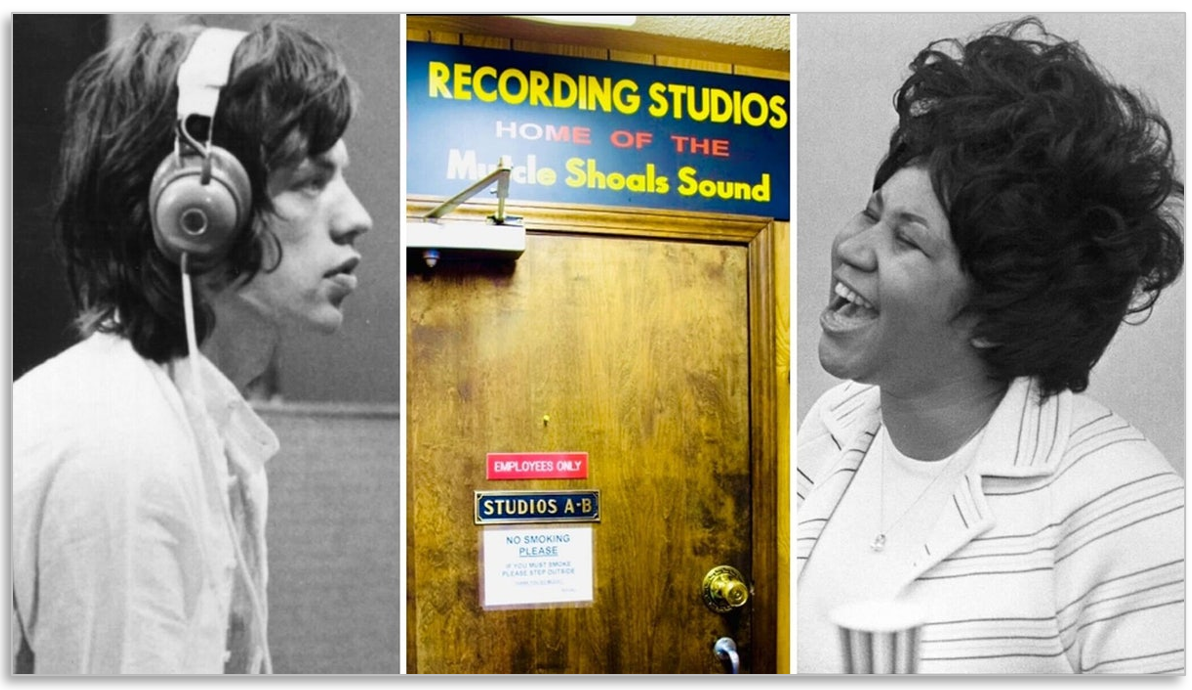
Hall and Wexler had a falling out. Soon after, Wexler helped fund Hall’s former house band, as they left to set up their own competing studio, the Muscle Shoals Sound Studio. Both studios became world renowned, attracting artists such as Duane Allman, the Rolling Stones, Bob Dylan, Lynyrd Skynyrd, Cher, Joe Cocker, Rod Stewart, the Staple Singers, Bob Seger, George Michael, Jimmy Cliff, and many more. It was here that the Stones recorded “Brown Sugar” and “Wild Horses” and Seger did a lot of his work.
“Now Muscle Shoals has got the Swampers
And they’ve been known to pick a song or two (yes, they do)
Lord, they get me off so much
They pick me up when I’m feeling blue, now how ’bout you?”
— Lynyrd Skynyrd, “Sweet Home Alabama”
The guys who left Rick to form the Muscle Shoals Sound Studio were given the affectionate name of the “Swampers” by Leon Russell’s producer while they were making Leon’s gold record at the studio. The name stuck and was made famous by the song “Sweet Home Alabama”, quoted just above. Even though the song is more than half a century old, I’ll bet most readers, even the youngest, know that song. There is so much more to the story, and it is captured in the enjoyable documentary, pictured on page one. I recommend it.
“Take your burdens to the Mardi Gras
Let the music wash your soul”
—Paul Simon, “Take Me to the Mardi Gras”
Paul Simon is said to have been thoroughly impressed by the song “I’ll Take You There,” recorded by the talented Staples Singers at Muscle Shoals. He began asking around, saying he wanted to cut a song backed up by “the black guys who played on that song.” He was put in touch but told that they “were mighty pale.” While working on his There Goes Rhymin’ Simon album, he booked four days to record the song, “Take Me to the Mardi Gras”, figuring it would take that long to finish. He and the Swampers were able to knock it out in 2 hours. Since he had paid for four days, they kept going, playing “Loves Me Like a Rock” and, of course, our title song, “Kodachrome” (from which all subsequent lyrics are drawn.)
“They give us those nice bright colors
They give us the greens of summers
Makes you think all the world’s
A sunny day, oh yeah”
—Paul Simon, “Kodachrome”
When I was young, I always liked the song but wouldn’t say I loved it. Now, after hearing about some of the recording techniques, such as pencils on a cardboard box, and more importantly, spending time reflecting on the song, I find it interesting and insightful. The song is ostensibly about Kodak’s popular film, but it is about so much more. It seems to be about perception versus reality. Per lyricstories.com, it “uses nostalgia, fantasy, and humor to question how we see the past.” They go on to add, “the deeper point is that Kodachrome tricks you into thinking everything is perfect. It doesn’t just capture memories, it edits them.” Clearly, these phenomena started long before the advent of social media.
“And everything looks worse in black and white.”
This reference to the tendency to use media to edit and enhance reality reminded me of one of the better books I’ve read – The Fifties, by David Halberstam. The book bounces from place to place, tackling diverse subjects. When I read it in the 1990s, I latched onto the idea that the trends he discussed about America in the 50s portended similar trends in the emerging markets of the world in the 2000s. This largely played out. But what strikes me as relevant here are the effects of transformative media. He talks about how those who understood and adapted did well, while those who did not came across poorly or slowly slid into oblivion. Television was revolutionary. Halberstam suggests, for example, that Richard Nixon’s career was saved by his early adoption of television and his famous Checkers speech, featuring his cocker spaniel. But later, his poor showing on TV, relative to a poised John F. Kennedy, cost him the presidency. Interestingly, on their present-day Acquired podcast (episode: “The NFL,” Jan. 26), Ben Gilbert and David Rosenthal credit the prescient use of television as the reason football usurped baseball as America’s favorite sport.
More to the point I wish to make here, is that Halberstam blames the 1950s media for sowing the seeds of social upheaval during the late 60s / early 70s. People watched close-knit families living out the American Dream on shows like The Adventures of Ozzie and Harriet or Leave It to Beaver and wondered if they themselves were the only people in the country who weren’t all that happy. As it became clear “the establishment” was misleading them and many others felt as they did, a whole generation began to rebel. He may or may not have been correct about this, but it is certainly worth contemplating now, in the contemporary “post-truth” world of transformational media.
Nowadays, the media consistently tells us that the economy is humming along, but many people feel they’ve been left out. Is that a major factor in the global increase in populism, nationalism, and general dissatisfaction?
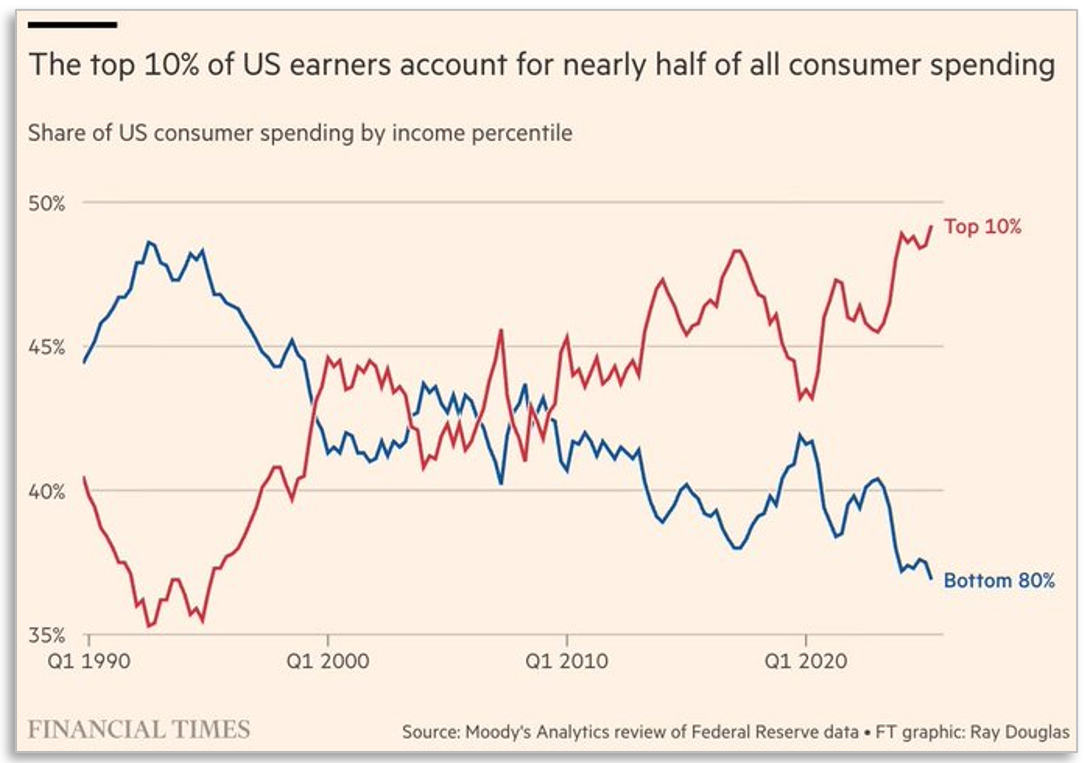
Momma Don’t Take My Kodachrome Instagram Away
More importantly, when many young people form their views and their self-esteem based on social media, what will be the consequences? Life is tough enough for adolescents, assessing how they fit in, without having to compare themselves to fictional, aggrandized versions of others. People routinely make themselves look thinner, prettier, fitter, etc… As Paul Simon pointed out a half century ago, “they give us those nice bright colors, give us the greens of summers, makes you think all the world’s a sunny day.” Plus ça change, plus c’est la même chose. (For those unfamiliar with this French saying, the more things change, the more they stay the same.)


“I got a Nikon camera; I love to take a photograph”
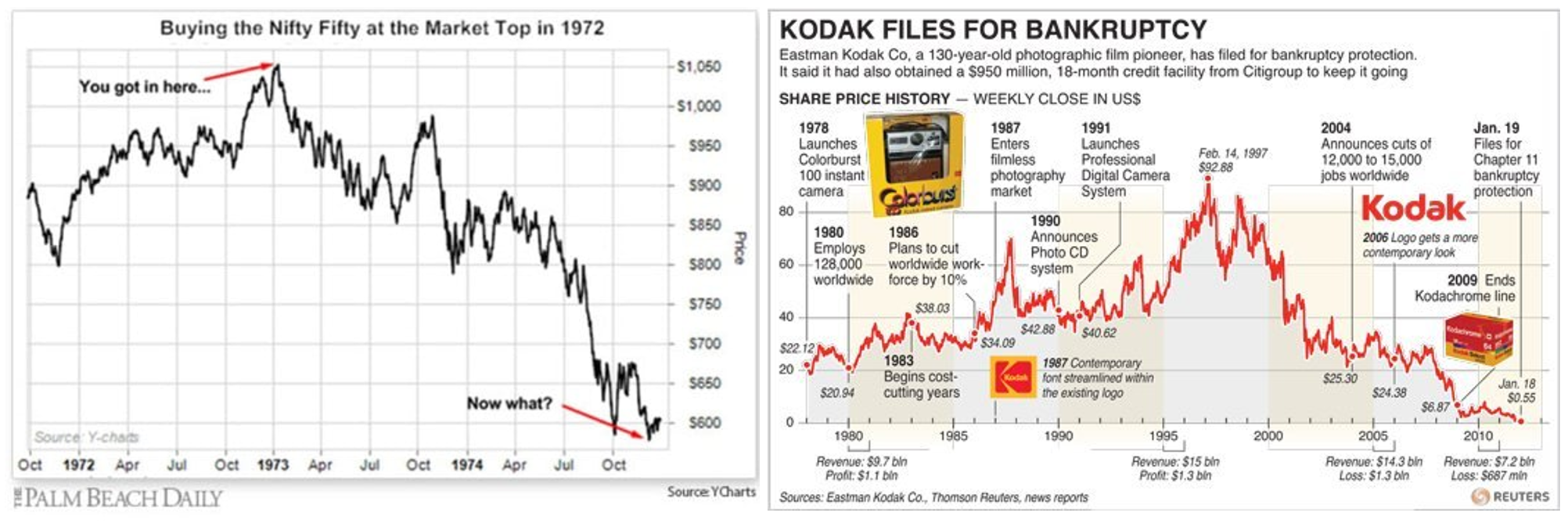
‘Plus ça change’ serves as an excellent segue to our next point. It’s a point we’ve made in the past—although things couldn’t be more different from the 70s, human nature remains the same. The 70s can be instructive. Photography was a growth business, and Kodak was a dominant, universally admired business. Its stock was one of the famous Nifty Fifty, or “one decision” stocks, whose businesses were so good that the only decision one needed to make was to buy. They were a quasi-monopoly, but they did have some competition from Polaroid. Whereas Kodak made film, which added color and effectively “edited” the pictures to make them look better, Polaroid had instant film. For younger people, it may be hard to imagine, but instead of snapping a pic on your phone, people used to have to take a picture, deliver the film to a processor, wait several days, come back, pay money, and pick it up. Not all the pictures came out well. Polaroid pictures developed on the spot, ready in a minute. Needless to say, sales boomed. Kodak and Polaroid were must-own stocks which performed spectacularly … until they didn’t. Polaroid fell from $140 to $14 over two years. Kodak found a second life, post the 1974 bust. Decades later, both went bankrupt. Whether there’s a message here pertaining to the must-own stocks of 2026, we’ll leave to the reader to discern.
“If you took all the girls I knew when I was single
And brought ’em all together for one night
I know they’d never match my sweet imagination”

The internet has a multitude of thoughts as to what message the lyrics (above) are meant to convey. There seems to be a broad understanding that reality doesn’t match our imagination. The future doesn’t often measure up to one’s hopes, and the past probably was not anywhere near as good as we remember it to be. With that in mind, it is best that I acknowledge that the stock market and geopolitics of the past probably weren’t as rosy in reality as they still reside, vividly, in my mind. My worries about today’s markets are hopefully based on a false reality. Of course, I doubt that.😉 The fact that concerns about record high valuation multiples in conjunction with record debt levels, high deficits, and a changing world order could be well-founded, presents an inordinate amount of risk. As such, we gain comfort by having a well-diversified stock portfolio, laden with positive optionality and significant inherent inflation protection. Positive asymmetry seems imperative in today’s market. Might the Mag 7 be this generation’s Nifty-Fifty? Could some of today’s highfliers become this era’s Kodak or Polaroid?
Secondly, regarding sweet imagination, AI famously hallucinates, but do they imagine? Do they create? Intelligent people can, and do, argue both sides of this. One thing is clear, those who try to out calculate, out gather, out task technology (including AI), seem to be doomed. We believe young students are best served by learning to think, create, be human, connect, and be intellectually curious. We don’t believe computers will get to this point for some time to come. We don’t know the distant future but are confident that these traits will continue to give Kopernik competitive advantages in terms of analysis, behavioral attributes, and organizational size and structure. We concede in terms of data gathering and information, but view the other factors as much more important.
“When I think back on all the crap I learned in high school
It’s a wonder I can think at all
And though my lack of education hasn’t hurt me none
I can read the writing on the wall”
We will end with the lyrics with which Simon began. My presentation in Tuscaloosa was entitled “Going Against the Wisdom of the Crowd,” which borrowed heavily from my forthcoming commentary, and included quotes such as the following: “There is no failure in learning, but there can be in refusing to unlearn” (Einstein) and “The illiterate of the 21st century will not be those who cannot read and write, but those who cannot learn, unlearn, and relearn” (Alvin Toffler). It went over many of the commonly held precepts of the investment world that we believe are misguided. The commentary will be entitled Everybody Knows and addresses a whole host of issues where Kopernik holds a distinctly non-consensus view. Hopefully, it will be in your inbox within the next month or so. In a nutshell, our message to the students was, “in addition to your classes, take time to ‘read the writing on the wall.’”
Cheers,
David B. Iben, CFA
Co-Chief Investment Officer & Lead Portfolio Manager
March 2026
P.S. Simon’s lyrics evoke images of vibrant green. The river outside my window has just been dyed green for St. Patrick’s Day. Kopernik likes green but prefers evergreens to greenbacks. Driving through miles of evergreen forests gave me plenty of time to ponder. Expanding on the well-known philosophical thought experiment about a tree falling in the forest, one wonders, “What if the central banks print a boatload of money and no one notices. Is there inflation?” Be on the lookout for our forthcoming paper discussing why we are investing in forest stocks.


Important Information and Disclosures
The information presented herein is proprietary to Kopernik Global Investors, LLC. This material is not to be reproduced in whole or in part or used for any purpose except as authorized by Kopernik Global Investors, LLC. This material is for informational purposes only and should not be regarded as a recommendation or an offer to buy or sell any product or service to which this information may relate.
This letter may contain forward-looking statements. Use of words such was “believe”, “intend”, “expect”, anticipate”, “project”, “estimate”, “predict”, “is confident”, “has confidence” and similar expressions are intended to identify forward-looking statements. Forward-looking statements are not historical facts and are based on current observations, beliefs, assumptions, expectations, estimates, and projections. Forward-looking statements are not guarantees of future performance and are subject to risks, uncertainties and other factors, some of which are beyond our control and are difficult to predict. As a result, actual results could differ materially from those expressed, implied or forecasted in the forward-looking statements.
Please consider all risks carefully before investing. Investments discussed are subject to certain risks such as market, investment style, interest rate, deflation, and illiquidity risk. Investments in small and mid-capitalization companies also involve greater risk and portfolio price volatility than investments in larger capitalization stocks. Investing in non-U.S. markets, including emerging and frontier markets, involves certain additional risks, including potential currency fluctuations and controls, restrictions on foreign investments, less governmental supervision and regulation, less liquidity, less disclosure, and the potential for market volatility, expropriation, confiscatory taxation, and social, economic and political instability. Investments in energy and natural resources companies are especially affected by developments in the commodities markets, the supply of and demand for specific resources, raw materials, products and services, the price of oil and gas, exploration and production spending, government regulation, economic conditions, international political developments, energy conservation efforts and the success of exploration projects.
Investing involves risk, including possible loss of principal. There can be no assurance that a strategy will achieve its stated objectives. Equity funds are subject generally to market, market sector, market liquidity, issuer, and investment style risks, among other factors, to varying degrees, all of which are more fully described in the fund’s prospectus. Investments in foreign securities may underperform and may be more volatile than comparable U.S. securities because of the risks involving foreign economies and markets, foreign political systems, foreign regulatory standards, foreign currencies and taxes. Investments in foreign and emerging markets present additional risks, such as increased volatility and lower trading volume.
The holdings and topics discussed in this piece should not be considered recommendations to purchase or sell a particular security. It should not be assumed that securities bought or sold in the future will be profitable or will equal the performance of the securities in this portfolio. Kopernik and its clients as well as its related persons may (but do not necessarily) have financial interests in securities, issuers, or assets that are discussed. Current and future portfolio holdings are subject to risk.
Commodities may be affected by changes in overall market movements, changes in interest rates, and other factors such as weather, disease, embargoes, or political and regulatory developments, such as trading activity of speculators and arbitrageurs in the commodities. Investing in commodities entails significant risk and is not appropriate for all investors.